
Medicina de Cacao
A blog discussing the medicinal uses of cacao, it’s cosmological place in ancient Maya’s worldview, how it teaches us about true sustainable agriculture, & myth de-bunking of Peru as the birthplace of these ancient trees!
Written from the shores of Lake Atitlan, Guatemaya x
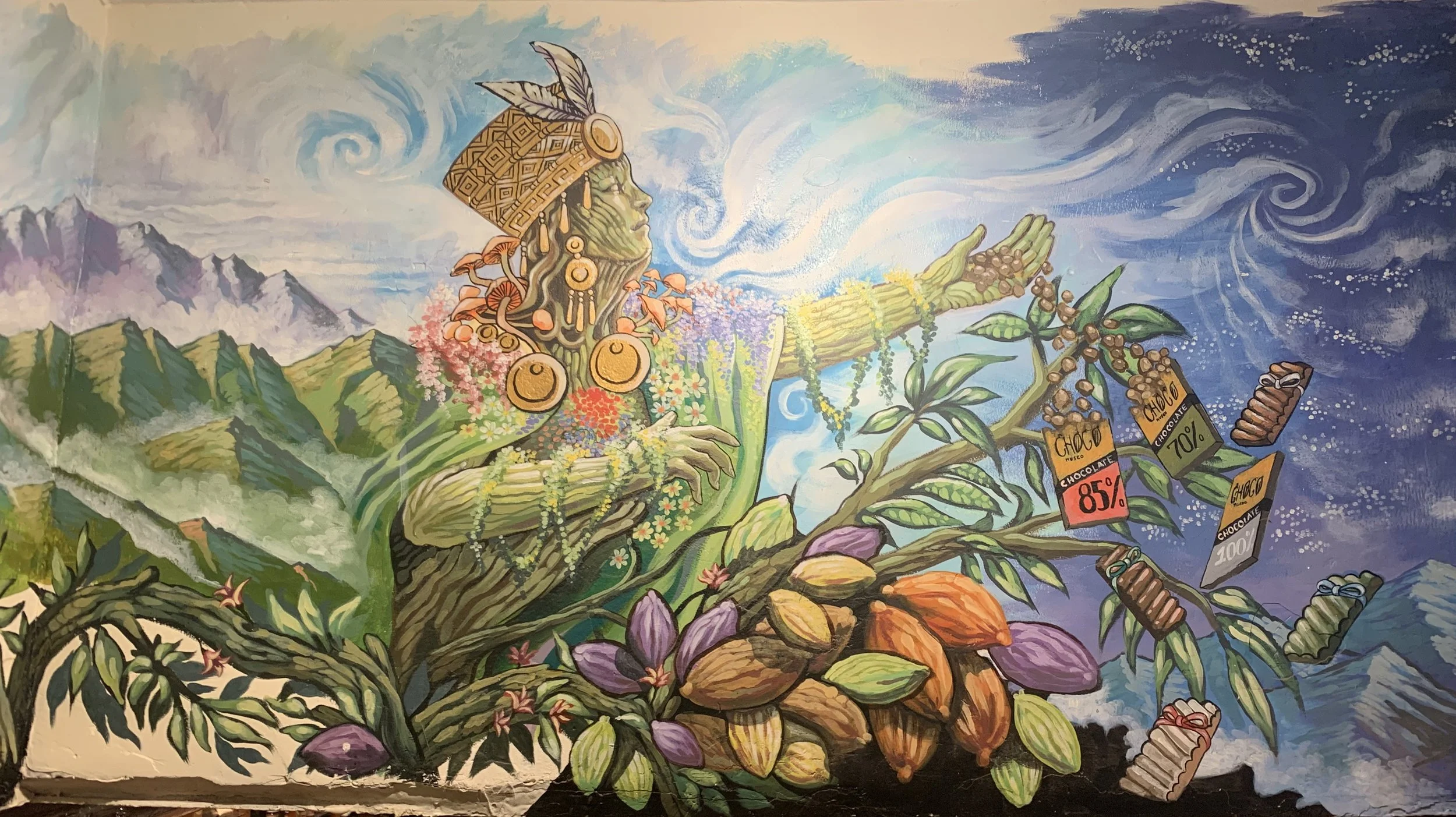
Chocolate in all its forms, originates from the Theobroma cacao tree.
It produces pod-like fruit containing seeds known as cacao beans.
Theobroma is an ancient Greek word meaning ‘food of the gods’, perhaps based on the rich vitamin and mineral content of the cacao bean.
The bean is also high in fat as well as providing carbohydrates, dietary fibre and protein.
Cocoa (not chocolate!) has been linked to reduced risk of
• cardiovascular disease
• inflammatory diseases
• cancer• metabolic disorders such as diabetes
Based on antioxidant, anti-inflammatory, immune modulating and blood glucose balancing effects.
Cocoa (from the raw cacao bean)
promotes coronary vasodilation, increases nitric oxide to allow vascular relaxation, improves endothelial function, decreases platelet aggregation, decreases amount and oxidation of LDL cholesterol, increases HDL cholesterol (reduces blood pressure and improves cholesterol levels).
reduces cytokines and transcription factors that cause inflammation
promotes innate immunity (helps fight infection).
From raw cacao bean to chocolate
Process includes fermentation, drying, roasting, nib grinding and refining, conching and tempering.
The phytochemical (plant chemical) and nutritional content of the bean is altered at the different stages.
Effects are most strongly evident during fermentation, drying and roasting.
Risks associated with eating raw cacao (overconsumption)
• Overstimulation of the adrenal glands and kidneys due to its caffeine and theobromine content, both of which have a stimulatory effect. Long-term this can lead to addiction, insomnia, nightmares, fatigue, depression, mood swings, anxiety and abnormal heart rhythm.
• Poor digestion, constipation, bloating and wind
• Lowered immune system function
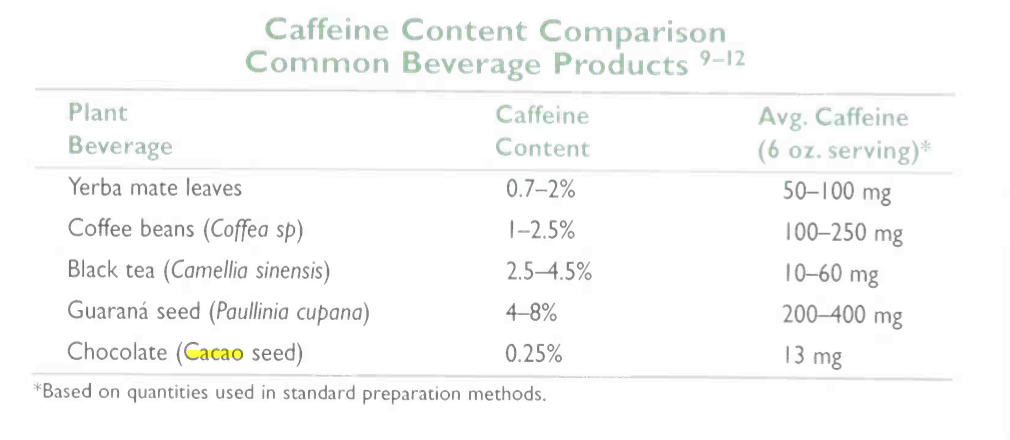
A table comparing the caffeine-content of common plant stimulants.
“The Healing Power of Rainforest Herbs” by Leslie Taylor
Guatemala’s history of cacao
Guatemala’s Mayans have used cacao for thousands of years, ceremonially & medicinally. Eaten & drunk ritually, as well as given as offerings for sacred events.
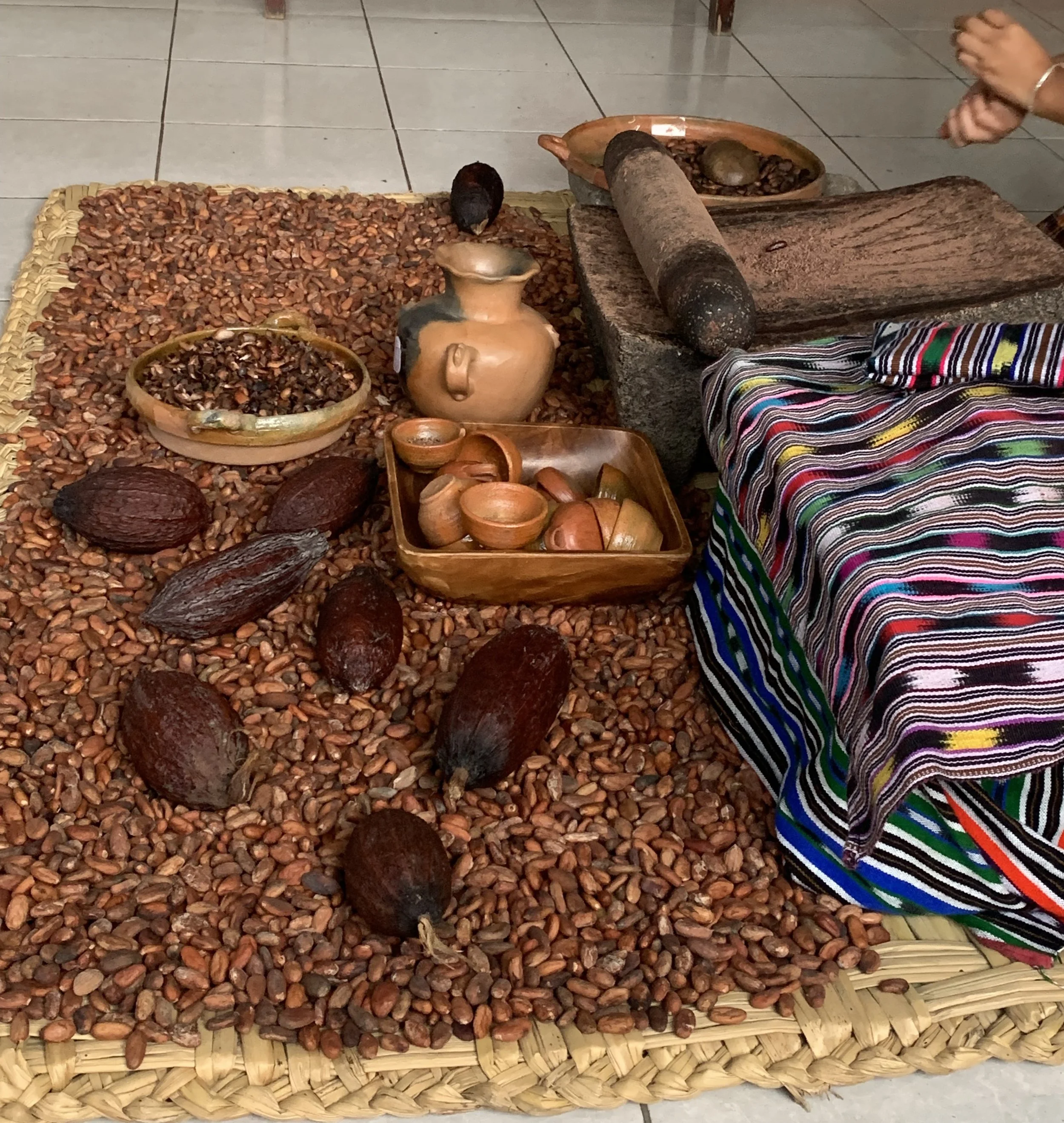
We had the pleasure of visiting a local cacao farm in Lake Atitlan where the Tz’utujil women shared with us their uses of cacao…
Check out my recent video all about it
From roasting beans or eating them raw as snacks, to crushing and pulverising into powders & pastes to make raw cacao products like bars and blocks - which can then be used in beverages (like hot chocolate) & food cooking.
They had a wide variety of blends to choose from but their most popular method was pure cacao blended with orange peel & raw grated cane sugar, yum! Modern use has also seen an increase in blending with cow’s milk too. Still we are talking about very raw & pure-to-source ingredients here, not your average C4dburys colonial chocolate chemical cocktail!
Not only speaking about pure cacao’s edible qualities, it has been used traditionally as medicine for tiredness & malaise, digestive complaints, postpartum diets & more!
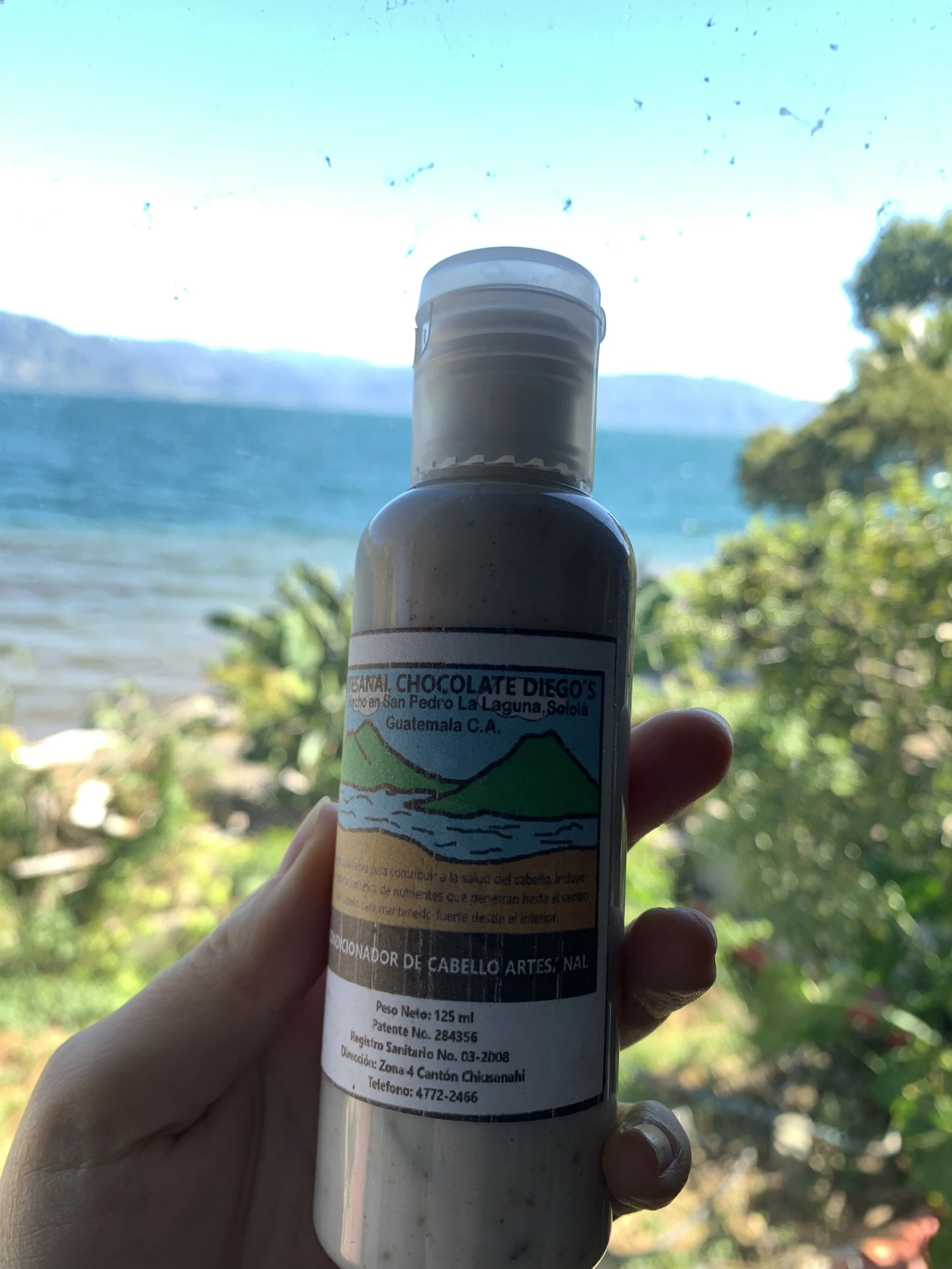
The women explained how the pith (white sticky substance) that surrounds the beans is used for shampoo and conditioner & even brushing teeth!
I can confirm it does wonders for the hair! My hair now has such a smooth & silky texture (I put this down to the high fatty acid contents in cacao), thanks to pure, raw, single-ingredients ! No thank you to heavy metal toiletry cons <3
We also had the pleasure of connecting with the community of spiritual elder and wisdom keeper Nana Marina Cruz , daughter of Tata Pedro Cruz. They are part of the Tz’utujil indigenous community here in San Pedro, Lake Atitlan & they work very closely with ceremonial cacao. They also hold every night beautiful fire ceremonies to tend to the fire of the ancestors, praying for the community & the collective. Their devotion & grounded wisdom is beyond inspiring. The Mayans are known as the keepers of time due to their extensive ancient calendars. From the sacred or lunar count the Cholq’iij calendar has energies of the “Nawales” which can relate to a persons birthday. You can find out more about these as well as male & female educational retreats online & in-person. Starting in December Nana Marina will have one all about Cacao! You can find event details on Nana Marina’s website, where you can also make donations, bulk purchase ceremonial cacao & request personal fire ceremonies for your prayers & intentions to be held deeply in these lands, by the wisdom keepers & ancestral fire that has been continuously tended to for generations…
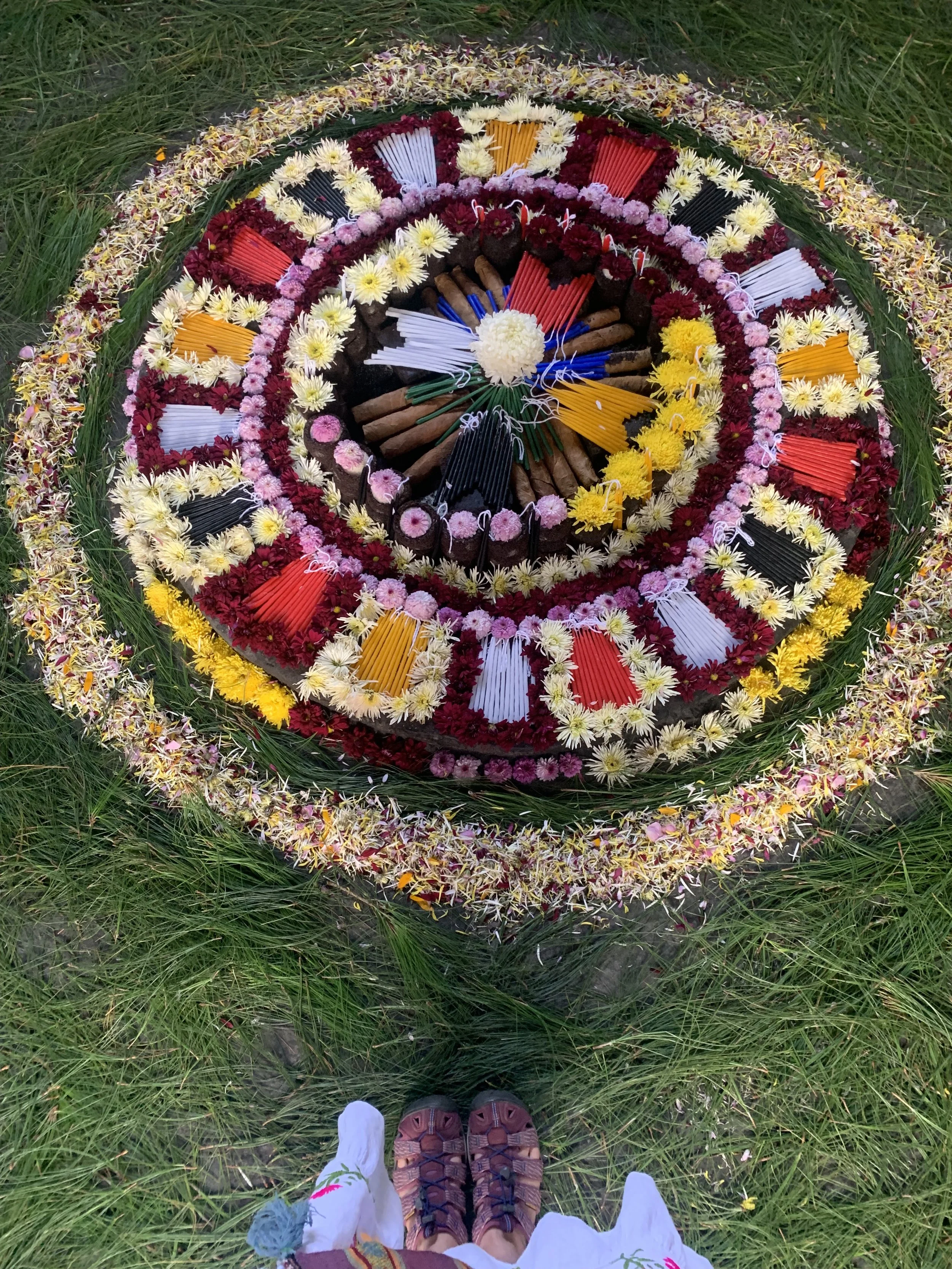
One of the fire ceremonies we attended, honouring ancestors & the sacred directions. Held in prayer, song & dance ✨
Cacao truly is sacred & wondrous (for spirit, mind & body) & the plant is multi-use in the sustainable way of using the term!
I found an interesting article discussing the potential ways of using cacao multi-purposely with minimal agricultural waste. I think there are some marvellous ideas to expand upon in farming practices, local & global. For example, using every part of the plant rather than throwing away shells that contain all the same compounds we use the beans for! (Cardenas et al. 2025)
But just a reminder here that the indigenous people’s practices & uses of cacao show the deep ancient knowing of this too! Less scientifically about global corporate farms, I’m speaking to their expertise in community growing & family-owned businesses… something we can all learn more from.
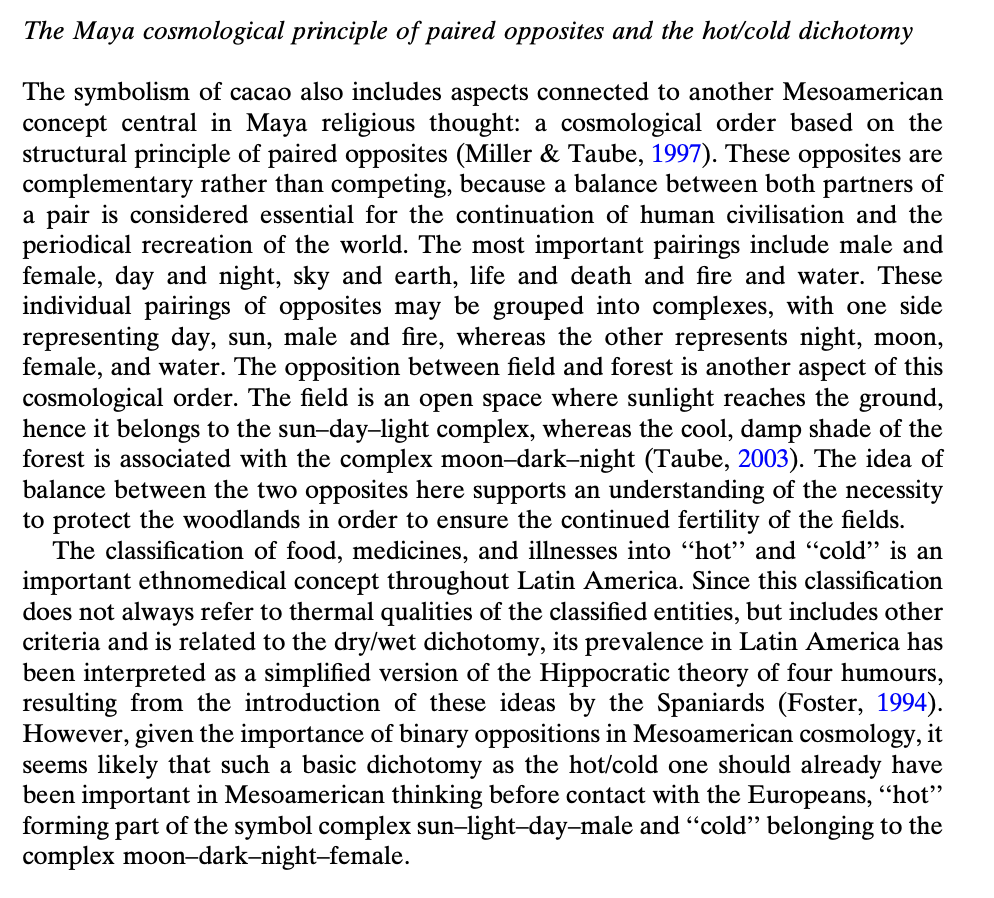
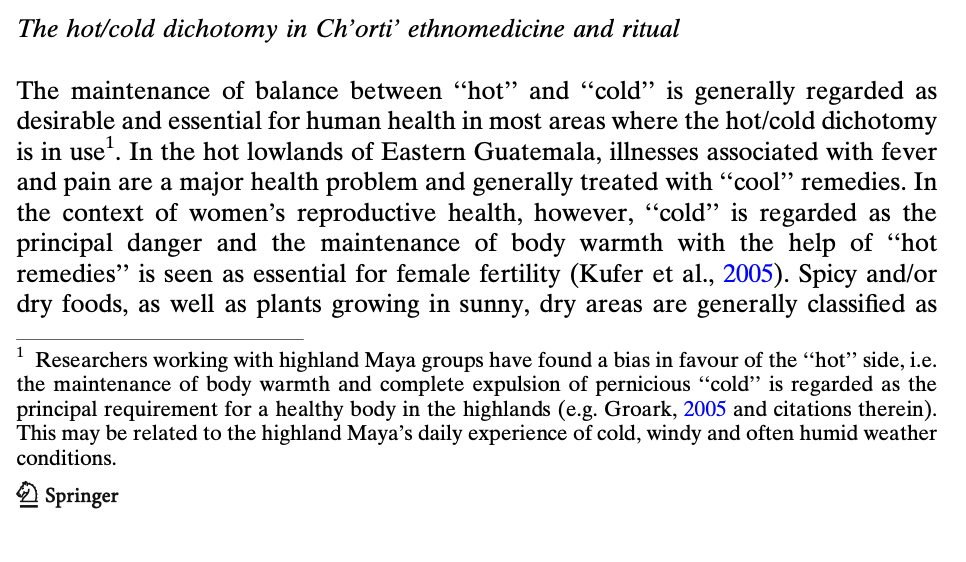
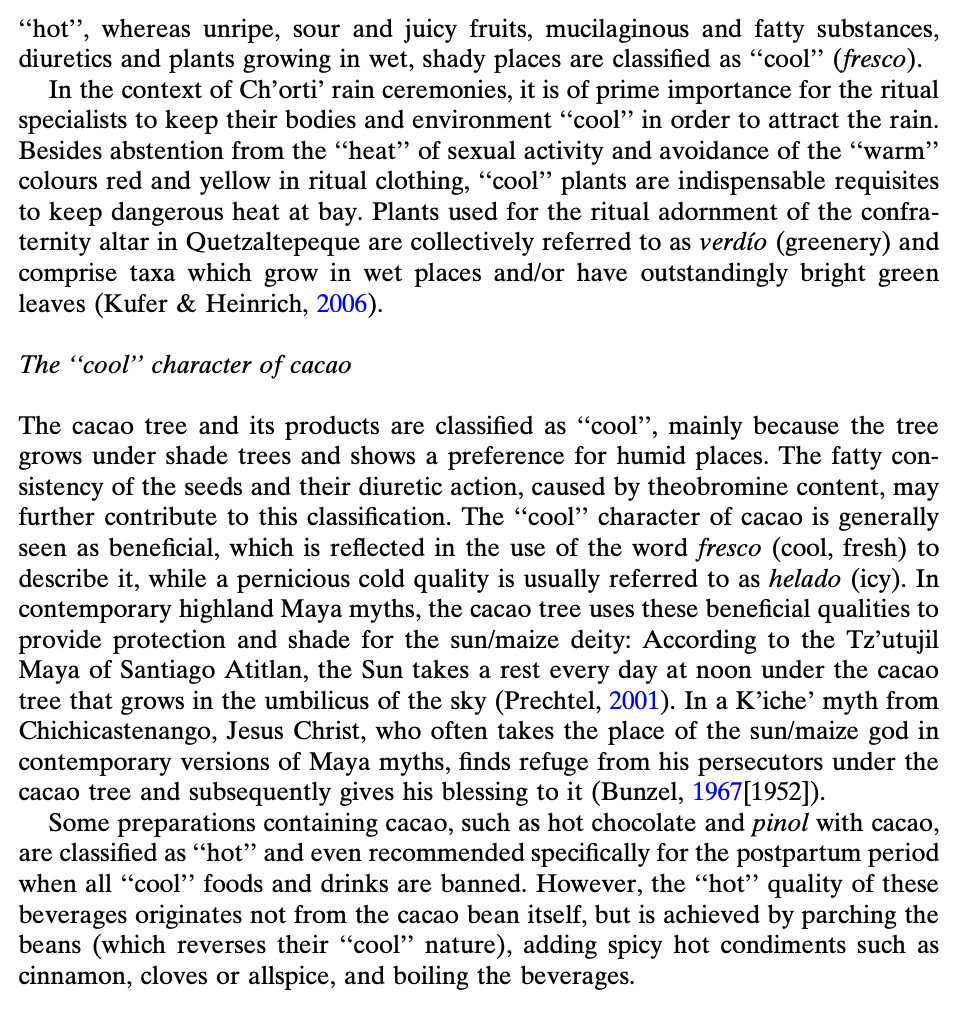
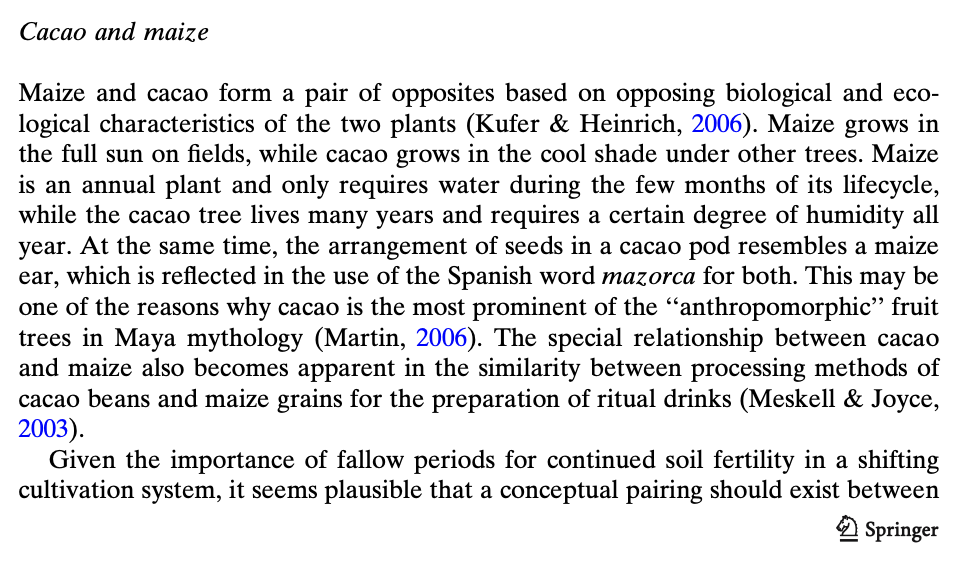
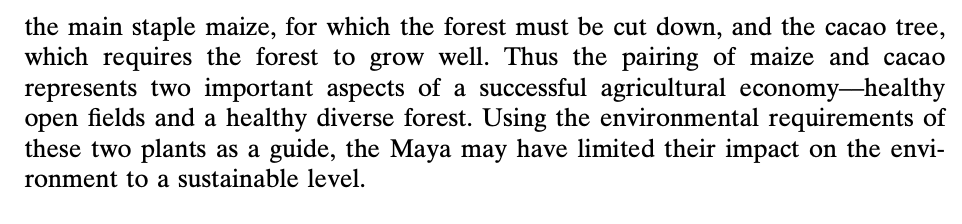
Another interesting paper with snippet images below discussing the cosmological views of the Mayans in regards to cacao and their pre-colonial understanding of ‘hot’ & ‘cool’ energetics that we use today in naturopathy & thus much older knowledge than Hippocrates! (Kufer, Grube & Heinrich, 2006). It also discusses the association between cacao & maize as a symbolic union of opposites as well as representing the union of sustainable agricultural practices - beautiful!
And in Recent News…
Cacao’s oldest ancestor found in the Amazon of Peru!
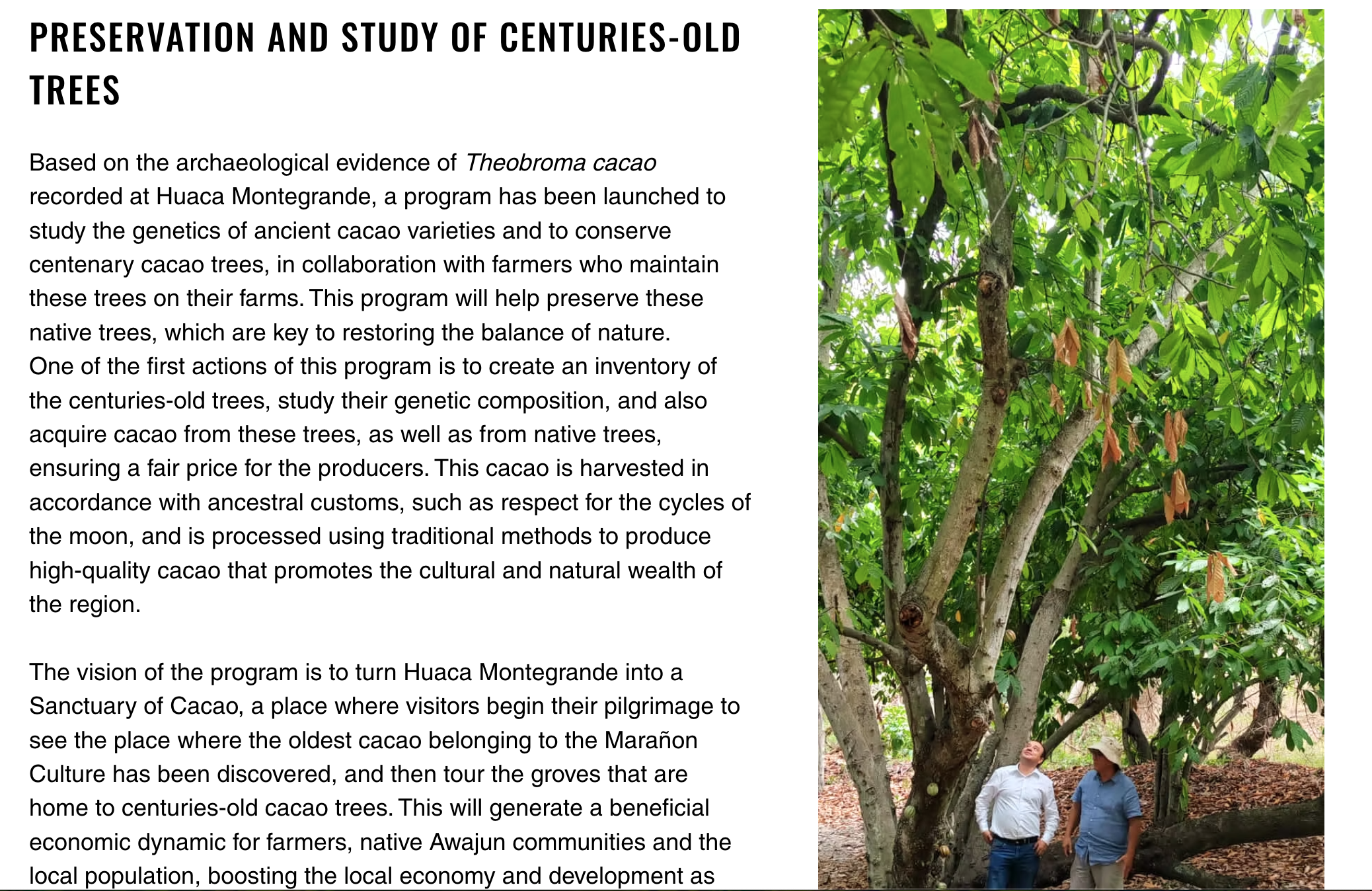
According to the researchers at Montegrande Cacao Sanctuary, ”Cacao, as a botanical species, originated in the Amazon approximately ten million years ago. Approximately 6,000 years ago, according to what carbon-14 dating from 2025 suggests, it was already used by the inhabitants of the Marañon Culture in the archaeological temple of Montegrande, as well as in the archaeological center of Palanda in Ecuador (known there as Mayo Chinchipe Culture), both from the same civilization.
According to genetic studies of cacao in Peru by Dr. Evert Thomás, published in “Catálogo de Cacaos en el Perú”, there are more than 14 genetic varieties in the country, which would make it its center of origin. And thanks to the archaeological discoveries of cacao in Montegrande, we can reaffirm that cacao is endemic to the Amazon.
Dr. Thomás argues that the cacao trees known as Cajamarca-Amazonas originated in Nauta, Loreto, in the heart of the Peruvian Amazon. From there, they were carried by humans to the Marañon Valley, and it is likely that the evidence of Theobroma cacao recorded at Montegrande shares this same genetic profile.
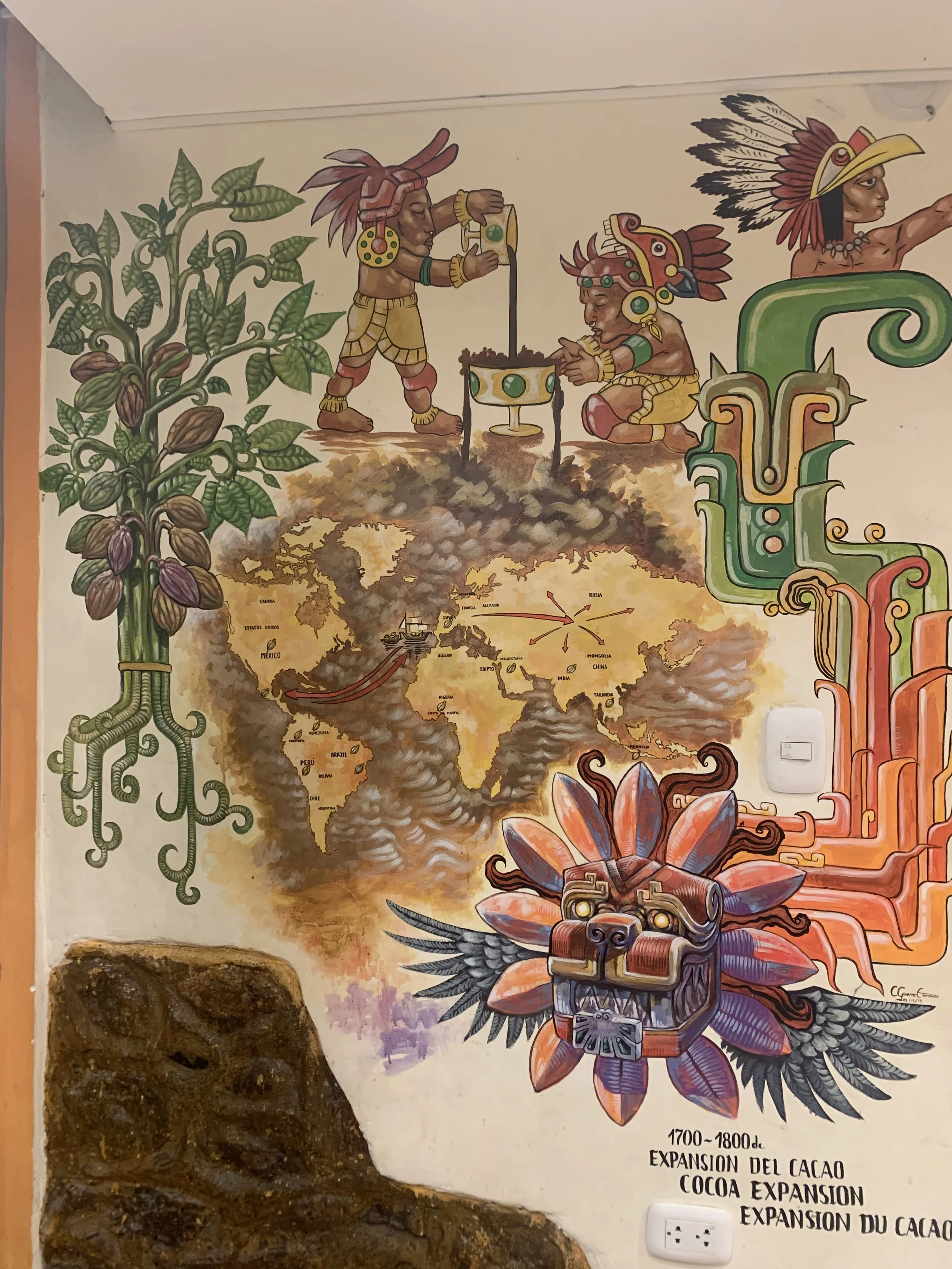
The Theobroma cacao would have been transported by the ancient inhabitants, and crossed the Andes Mountains until reaching the Pacific Ocean coast. From there, it would have been transported to Central America and Mexico through the Caribbean islands. As part of the treasures of the conquest, cacao was taken to Spain, from where it was dispersed all over the world. Switzerland, in particular, adopted it to produce some of the finest chocolates in the world.”
Thank you for coming on this journey with me. It is an honour & privilege to grace these sacred lands.
In homage to Cacaocita la Medicina, our plant spirit guides & our ancient ancestor communities of the indigenous, for their preserved knowledge.
Wishing you the purest in heart & health,
Oceana x